Showing posts with label cinematography. Show all posts

Wednesday, February 07, 2007

Infamous - or at least not famous


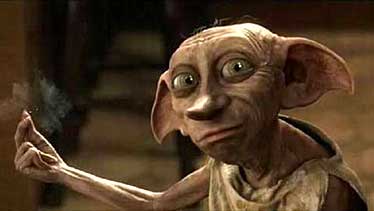
Somebody said, when the subject came up "I don't know why anyone would make a film about Capote when there was one just out". I'm not a producer so I neither can answer, nor am I interested in answering that question. I can however offer a perspective on why you might go and watch it. The main reason is that it is a fine film with a balanced script and a set of excellent performances: Dobby the House Elf utterly outdoes Philip Seymour Hoffman's smug Hollywood turn. Sandra Bullock is an even less likely comfortable shoe wearing Harper Lee than Katherine Keener - looking like she is about to corpse every time Capote opens his mouth down South adds great charm to the movie. James Bond is a rounded, believable, frightening Perry. The whole film has many charms: in this we can see why Capote was popular as well as the fact that artists are monsters cannibalising life. The relationship with Perry is very believable rather than the coy cut to the next morning of the previous film. The supporting cast is huge - Sigourney Weaver as a grande dame best mate, Peter Bogdanovich (I'd prefer he directed instead, we went to see his last film 'the cat's miaow' and it was a perfect ensemble piece), Isabella Rosselini...

All I remember liking about the other Capote film was the film emulsion. Normally most cinematographers seem to go for a chiaroscuro effect: doesn't matter if you're in a hospital ward the shadow side of your face will be pitch black. It's sort of the equivilent of the overenthusiastic foley artist in my book. In this however the print was undersaturated and the emulsion had a greeish hue: it looked like a late 50s early 60s Life magazine spread. The kind of thing where they followed Kennedy's campaign trail. I particularly remember in the jail scenes the dark of Hofmann's face being green.

As an actor pointed out to me: you can't really blame Hofmann for the facile part. All he did was an impersonation. Nothing else to the film really. Which reminded me of the other film I saw that same weekend last year: Walk the line. Again nothing but impersonation. Somebody said to me this week that the music made the film worthwhile. Buy the records. I don't need some actor doing them.

Both those films were deeply philistine: mimesis as the highpoint of art. Infamous, on the other hand was a real film. It added something to the world. Not the greatest film ever. But it was a piece of art.

Wednesday, October 11, 2006

White shirt, red mist

Early in Zidane, a 21st century portrait there were two images that spoke volumes about football and Zizou's place in it. The first two names visible after the opening montage, largely abstract of closeups of CRT TV, blurry players in white decomposing into tricolour blobs, were on the back of two Real Madrid players: Zidane and Pavon. This, I think shows the extent to which editing and shot selection are inherently problematic in a film like this (though I think only if you come to it with an assumption that you will see the match "as it really was" rather than just another version). The next was after five minutes sweating already and spitting and hawking out snots as he did the whole way through he is bobbing around, pointing at the ground and shouting for the ball to no avail. Reminds me of childhood.

For me it works best as a semi-abstract film. Rather than an attempt to impose another coherent narrative on the match from the commentators and TV's version (which I would suddenly like to see) we see the match in claustrophobic confusion. Thumps and bumps and runs. I think they were quite lucky that Villareal, judging by the number of dribbles Zidane did and the number midshots in which Zidane was alone, didn't man-mark him at all. Perhaps the twilight of his career was the time to do it and his years of delaying were part of a plan... It was interesting to see how much of his game involves trapping with his chest and stomach and cushioned headers. There were sequences when he didn't touch the ball with his feet. But when he did, ball at feet, turning defenders inside out before lobbing a cross over the keeper into the path of one of his teammates requiring only any kind of touch to be a goal...

He didn't say must. Just loads of 'hey's the odd 'aqui', a subtitle told us that he said to the referee 'you should be ashamed' after a dodgy penalty award. Shortly before the end Roberto Carlos (the player he had most interaction with) said something funny and Zidane laughed and kept the smile on his face a long time, the way you do in a time when you have had no human communication. But did he smile any other time? Was it lost in the edit? This is no dogma style document that promotes its purity. I guess that they did edit the film as near as they could to real time using the synchronised timecode but even at that the choices mean that this one smile could simply be the one they left in. Around about then I noticed the soundtrack began to foreground the thumps of people hitting each other. Zidane had been clattered to the ground early on, earning a Villareal player the first booking. There had been a couple more but in general the physical power of Zidane's game was a constant presence and he muscled his way on to several balls. Forlan got sent off (he also missed a sitter disproving the notion that he bangs them in for fun in Spain) and the camera made a big deal of him pushing Senna. And then (was it Raúl?) was bustled off the ball at the byline and Zidane barged in swung a punch and grabbed some guy. Game over and the film makers must have been glad he got sent off in the final.

Funny thing is, he was only a cameo but, the player showing mastery and artistry and consummate genius in this game was not Zidane: it was Casillas.

Friday, September 30, 2005

Physical Theatre

I couldn't count the amount of times I've heard people say that theatre in Dublin is bad as there's no physical theatre. And let's not talk about the odd time I read the papers (refusing to get the Irish Times means that at least I'm spared the mantra from them). I have a problem with this. I don't have a problem with 'physical', or dance theatre, or theatre of movement yada yada yada, I have a problem with the assumed primacy of it. Just as I have a problem with 'pure' cinema. Hitchcock may be pure cinema, as Truffaut said the second last of the masters, only Welles arriving in the era of sound when text took over and people lost their visual purity, but just watch him in a real theatre with real normal people rather than a film studies class and see the difference. I can appreciate Hitchcock when I read about him or watch how he puts a scene together, but when you are in a crowd his films are frankly embarrassing. His misogyny is crass beyond belief and, on the two occasions I have gone to see rep presentations, both in crowded cinemas, the audience giggled and finally laughed out loud at the picture. Another example, from a lesser director, I watched a TV version of Dr. Zhivago a couple of years ago, and I thought of the different choices made in presentation from David Lean's. David Lean's version had a scene where Lara was in a horse drawn carriage with the older man, he tried to kiss her, cut to the Hussars drawing swords, the carriage starts bouncing, the hussars charge the protest march, carriage bouncing, hussars crack heads, blood stains the snow. Okay, so I know she was raped and was a virgin, in the TV version it was made explicit that this was the case - rather than some kind of visual allusion which merely trivialises.